 Career
In this article (10)
- What Should You Consider Before Choosing a Course After Graduation?
- Top Career-Oriented Courses to Explore After Graduation
- Digital Media & Marketing
- Graphic Design
- Video Editing & VFX
- What Skills Can Help You Become Job-Ready?
- How to Choose the Best Course After Graduation?
- Is a Six-Month Professional Course Enough to Start Your Career?
- Why Choose IMAGIC for Career-Oriented Training?
- Conclusion: Take the Right Step Towards Your Professional Future
Which course after graduation would help you turn your academic qualification into a rewarding career? This is the most common question among graduates. If you have recently completed your degree, you might be wondering what to do next. Should you pursue higher studies, prepare for competitive exams, start looking for a job or develop specialised professional skills? With so many options available, choosing the right course after graduation can be challenging.
The modern job market offers opportunities beyond traditional career paths, but employers increasingly expect candidates to have practical knowledge, technical expertise and industry-relevant skills. Developing these abilities through professional training can help you explore new career possibilities, strengthen your professional profile and prepare for the demands of the workplace.
What Should You Consider Before Choosing a Course After Graduation?
Before enrolling in any professional course after graduation, it is important to understand your interests, abilities and career expectations. The right choice should align with both your personal strengths and the professional opportunities you wish to pursue. Start by considering a few questions:
- Do you enjoy creating visual designs?
- Are you interested in digital marketing?
- Do you love filmmaking and video editing?
- Are you curious about AI-powered tools?
Identifying your interests can help you shortlist suitable courses. Instead of choosing a programme simply because it is popular, consider whether the field offers opportunities for skill development, creativity and long-term professional growth.
Top Career-Oriented Courses to Explore After Graduation
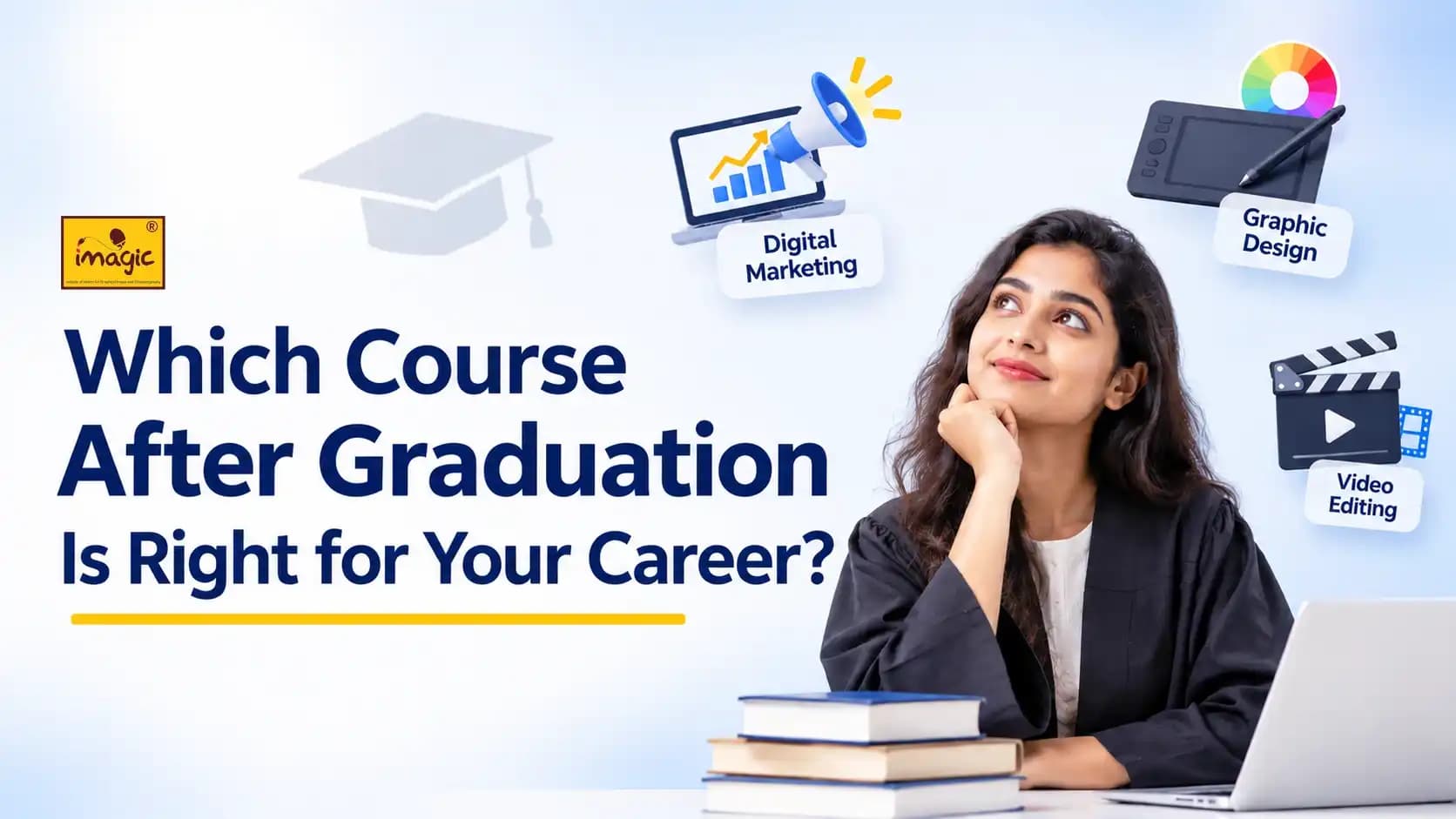
Several industries are creating opportunities for individuals with specialised technical and creative abilities. Among many professional course after graduation, worth exploring are Digital Media & Marketing, Graphic Design, and Video Editing & VFX.
Let's understand what each field offers and the skills you can develop through professional training.
Digital Media & Marketing
As businesses continue to expand their online presence, digital marketing has become an important part of brand promotion, customer engagement and business development. Organisations need professionals who understand digital platforms and can implement effective marketing strategies.
A professional digital marketing course can introduce you to various aspects of the industry, including:
- Search Engine Optimisation (SEO) and Answer Engine Optimisation (AEO)
- Social Media Marketing (SMM)
- Search Engine Marketing (SEM) and paid advertising
- Content marketing and lead generation
- Google Ads and website analytics
- AI-powered digital marketing tools
After developing these skills, you can explore career opportunities as a Digital Marketing Executive, SEO Executive, Social Media Manager and Content Marketing Executive.
Graphic Design
Graphic design is an excellent option for graduates who enjoy creativity, visual storytelling and communication. From brand identities and advertisements to social media graphics and digital campaigns, visual design is widely used across different industries.
A professional graphic design course can help you develop expertise in:
- Design fundamentals, typography and colour theory
- Branding and visual identity development
- Advertising and social media creatives
- Digital design techniques
- AI-powered graphic design tools
With practical experience and a well-developed portfolio, you can pursue roles such as Graphic Designer or Creative Designer.
Video Editing & VFX
The growing popularity of digital video content has created opportunities across entertainment, advertising, social media and online marketing. Businesses and content creators require professionals who can transform raw footage into engaging visual stories.
A video editing and VFX course can help you learn:
- Professional video editing techniques
- Audio editing and colour correction
- Motion graphics and visual effects
- Social media video production
- AI-powered video creation and editing tools
These skills can prepare you for career opportunities as a Video Editor, VFX Artist or Multimedia Professional.
What Skills Can Help You Become Job-Ready?
Choosing a suitable course after graduation is only the first step. To become prepared for professional opportunities, you must also develop the abilities employers expect from potential candidates.
Some important skills include:
- Technical knowledge: Understanding industry-specific software, applications and professional tools.
- Practical experience: Applying classroom learning to assignments, projects and real-world situations.
- Creative thinking: Developing original ideas and finding effective ways to communicate concepts.
- Problem-solving: Analysing challenges and identifying suitable solutions.
- Communication: Presenting ideas confidently and working effectively with others.
- Adaptability: Learning new technologies and keeping pace with changing industry requirements, including AI-powered applications.
A career-focused training programme that combines theoretical understanding with practical exercises can help you develop these competencies and improve your professional readiness.
How to Choose the Best Course After Graduation?
With multiple professional programmes available, selecting the right course after graduation requires careful consideration. Rather than focusing only on course fees or duration, evaluate the quality of training and the opportunities it can provide.
Here are some important factors to examine before making your decision:
- Updated Course Curriculum: Check whether the syllabus includes current industry practices, relevant technologies and the skills employers expect.
- Hands-on Training: Prioritise programmes that offer practical assignments, regular exercises and project-based learning.
- Industry-Relevant Tools: Make sure you get opportunities to work with professional applications and technologies used in your chosen field.
- Portfolio Development: Look for courses that allow you to create practical projects and build a portfolio to demonstrate your capabilities to potential employers.
- Job Placement Assistance: Understand whether the institute offers career guidance, interview preparation and placement support after course completion.
- Learning Structure: Choose a programme with a clear learning roadmap, experienced trainers and sufficient time for practice and skill development.
Ultimately, the best course after graduation should help you move beyond theoretical knowledge and prepare you to apply your skills in a professional environment.
Is a Six-Month Professional Course Enough to Start Your Career?
You don't necessarily need to spend several additional years studying to acquire specialised professional skills. With a structured curriculum, consistent practice and industry-oriented training, it is possible to develop a strong foundation within a shorter period. A six-month professional programme can be a practical choice for graduates who want to learn a specialised skill, understand industry tools and prepare for entry-level career opportunities.
At IMAGIC, graduates and aspiring professionals can choose from three six-month AI-powered career programmes:
Each programme focuses on practical, industry-oriented learning, helping students gain exposure to relevant tools, develop professional skills and understand the requirements of their chosen field.
Why Choose IMAGIC for Career-Oriented Training?
Finding the right course after graduation also means finding an institute that understands the importance of practical education and career preparation. Since 2010, IMAGIC has been providing professional training in creative and digital fields, helping learners develop skills that can support their career aspirations.
Here is what makes IMAGIC a consideration for your professional learning journey:
- Six-month career-oriented professional programmes
- AI-powered learning with industry-relevant tools
- Practical assignments and hands-on training
- Guidance from experienced trainers
- Job placement support after successful course completion
With more than 2,000 students placed since 2010, IMAGIC aims to bridge the gap between professional training and employment opportunities. You can also attend a FREE Demo Class to explore the teaching approach, understand the course curriculum and identify which programme best matches your interests and career objectives.
Conclusion: Take the Right Step Towards Your Professional Future
Choosing the right course after graduation can influence the direction of your professional journey. Whether your interests lie in digital marketing, graphic design or video editing, developing specialised skills can help you explore new opportunities and adapt to evolving industry requirements. Take time to evaluate your strengths, research career options and select a professional course after graduation that offers practical training, relevant tools and career guidance.
Explore IMAGIC's six-month AI-powered career programmes in Graphic Design, Digital Media & Marketing, and Video Editing & VFX in Shrirampur and Kolkata.
Ready to take the next step? Book your FREE Demo Class at IMAGIC today and start building your career with the right professional course after graduation!
Imagic Editorial Team
Faculty and editorial writers at Imagic Shrirampur — covering careers in design, video editing, and digital marketing across India.